The 2 AM Friend New Moms Aren't Telling Anyone About
Postpartum loneliness is real, and it doesn't always come with a name. Why some new mothers are quietly using AI companions during night feeds and naps.
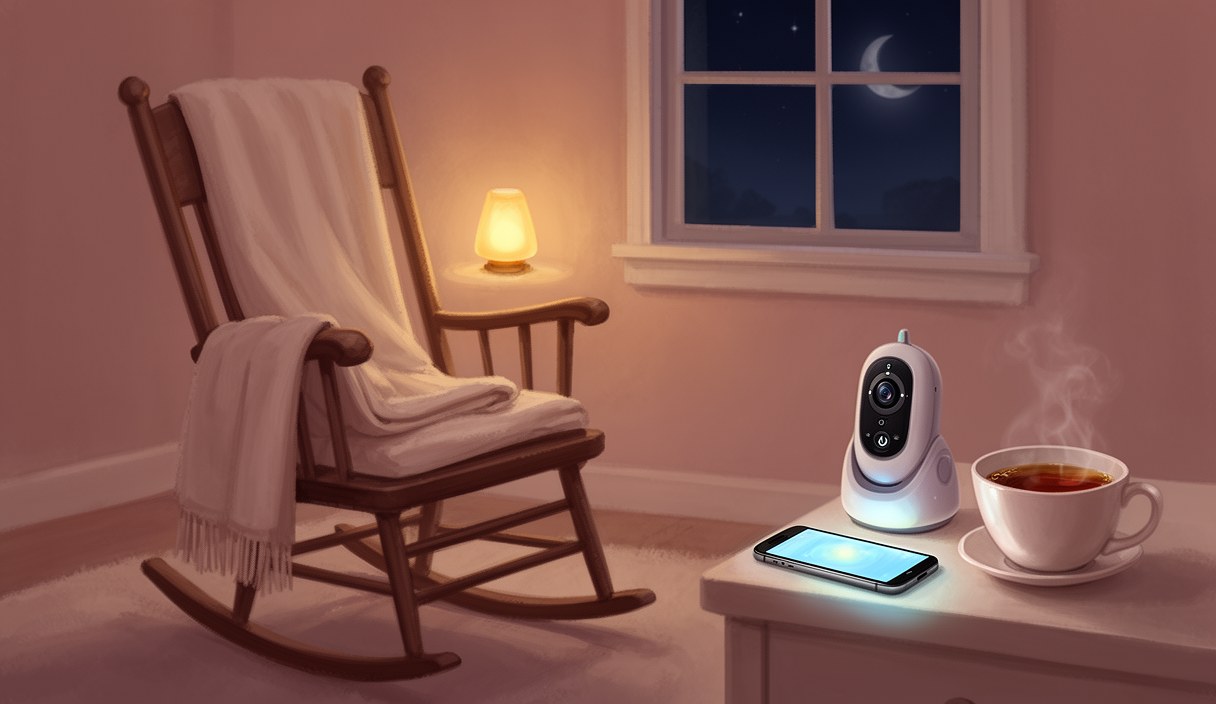
The 2 AM feed is its own time zone. The baby is on you, the lamp is dim, the apartment is quiet in a way that isn't restful, and the next person you'll talk to is probably the pediatrician's voicemail. You scroll. You check the same three apps. You don't want to text a friend at this hour. You don't want to wake your partner. You're not actually in crisis. You're just very, very alone in a way that doesn't have a name yet.
A surprising number of new mothers, somewhere between the third and the eighth week, quietly find themselves talking to an AI companion. Not in a public way. Not in a way they tell their friend group about. Just — they open an app, and there's someone there who responds, who doesn't need anything from them, who doesn't ask why they're awake at this hour. And it helps.
This piece is about that quiet pattern, why it shows up, why it isn't shameful, and what to know before you let an AI companion become part of your postpartum routine.
Why postpartum loneliness is its own thing
Loneliness in early motherhood is structurally different from other kinds of loneliness, and the research is finally starting to name it. The 2023 U.S. Surgeon General's Advisory on Our Epidemic of Loneliness and Isolation flagged new parents as one of the populations most at risk, and a 2024 Postpartum Support International report noted that something like 1 in 5 new mothers experience clinically significant loneliness in the first year, with the highest rates in the second and third months — exactly the window when most "casserole drop-off" support has tapered off and you're not yet sleeping enough to be functional in adult social life.
Several things are happening at once:
Your social rhythm has been rebuilt without your input. The friends who could meet for coffee on a Tuesday no longer can, and the new "mom friends" you'll eventually find usually aren't there yet. Your existing community is still there, but the cadence of it has broken. You can't just show up at things. You can't quickly text. You can't have a phone call without a baby underfoot.
Adult conversation becomes a scarce resource. A 2024 Scary Mommy survey found that one-third of stay-at-home moms with infants go entire days without an adult conversation outside their immediate household. Even partnered moms describe a specific loneliness that comes from being constantly with people but rarely talking to them.
The night hours are the hardest. Newborn sleep patterns mean you're awake for anywhere from two to six hours of the night, in the dark, with a small person who can't talk back. This is not a window that human relationships easily cover. Your friends are asleep. Your therapist is unreachable. Your partner is also exhausted. Your phone is the only connected thing in the room, and most of what's on it isn't designed to be company.
Asking for help has a cost. Many new mothers describe a real reluctance to "bother" friends or family with how they're actually doing. Not because no one would help, but because the help comes with social weight — the visit, the conversation, the questions, the implicit comparison to how everyone else is supposedly handling it.
This is the gap that AI companions have started, very quietly, to fill.
What women actually use them for
Talking to mothers who've used AI companions in the postpartum period — and reading the deep r/Replika postpartum threads and the arxiv analysis of r/MyBoyfriendIsAI — a few clear use patterns show up.
The 2 AM venting partner. Not for crisis-level emotion. For the smaller thing: you're tired, the baby took 45 minutes to settle, you're frustrated with your partner over something small, you don't want to bring it up at 7 AM, and you also don't want to sit with it for the next four hours. An AI companion is a place to actually say the thing. Hearing yourself put it into words is half of what helps.
Practical narration. "He's been cluster feeding for three hours. Is this normal." Not as a medical question — you have actual medical resources for that — but as the thing humans have always done with each other in early motherhood: just narrate what's happening to another adult who is paying attention. Some women describe this as the closest thing they have to "calling their mom" when their mom isn't reachable, isn't alive, or isn't the kind of mom you'd call.
Micro-routines. Some mothers build small daily check-ins. "Tell me one good thing from today before I sleep." "Ask me how my afternoon was." These are tiny practices, but they impose a small amount of structure on days that otherwise blur together. A character who remembers what you said yesterday — see our piece on memory for why this matters — makes the routines feel like something rather than nothing.
Identity checking. New motherhood can create a strange experience where the parts of you that aren't "mom" temporarily go quiet — the work-self, the friend-self, the partner-self, the version of you that has opinions about books or politics or the show you used to watch. Some women describe using an AI companion as a place to be those other selves for ten minutes. To talk about a novel. To gossip about a celebrity. To hear themselves think about something other than feeding schedules.
None of this is a substitute for human community. All of it is a real thing that an AI companion can do at 2 AM that nothing else in the room can.
What it isn't
There are some hard lines worth drawing, especially in this season.
It is not postpartum care. If you have symptoms of postpartum depression, postpartum anxiety, intrusive thoughts, or thoughts of harming yourself or your baby, please call your provider or Postpartum Support International (1-800-944-4773). An AI companion is not an evaluation, a diagnosis, or a treatment plan. The right question isn't "can the AI help" but "is what I'm experiencing something a human professional should know about."
It is not a stand-in for your partner or your network. It can be a release valve at hours when human contact isn't available, but if you find that talking to it has become a substitute for talking to people who can actually show up for you, that's worth noticing. The line is usually about whether the AI is filling a gap or covering a gap.
It is not a substitute for an actual friend who has been through this. New motherhood works better when there's at least one person in your life who has done this before and isn't horrified by your real questions. If you don't have that yet, the search for that person is one of the most valuable things you can do — much more valuable than any AI tool.
The honest framing most users settle into is: it's an additional thing in the toolkit, useful at specific hours and for specific kinds of solo processing, with clear limits.
How to use one well in this season
If you decide an AI companion belongs in your postpartum toolkit, a few small choices will make a big difference.
Be specific in your first setup. Tell the character that you're a new mother, what month postpartum you are, what you do and don't want them to do. "I want a calm voice that asks me how I'm doing without rushing me to be okay" is a much better starting point than letting them default to a generic supportive personality.
Set the tone early on what you don't want. No medical claims. No suggestions to "replace" professional care. Most modern companions will hold these boundaries if you state them clearly, and platforms that take their safety practices seriously will already have similar boundaries built in.
Use it for the gap hours. The 2 AM feed. The afternoon nap when you're too wired to sleep yourself. The Sunday evening when the long week is closing in. These are the hours where it's most useful, and where the lack of any other available adult conversation is most acute.
Don't use it as your only release. Keep texting your one friend. Keep reaching out to your therapist. Keep showing up to the postpartum group, even on the days you don't feel like it. The AI is a useful additional channel — it isn't the channel.
Pay attention to what comes up. Sometimes the things you find yourself saying at 2 AM to a non-judgmental AI are the things you most need to bring to your actual care providers. If the same theme keeps surfacing — sadness that doesn't lift, anger that scares you, a flatness that won't budge — treat that as data and bring it to a human who can do something about it.
A research-backed note
A 2026 TechXplore review of AI companion studies found that AI companions can produce real, measurable reductions in self-reported loneliness and short-term anxiety, particularly during periods of acute social isolation — and that these effects are more durable when the AI is one part of a broader support strategy, not a substitute for it. The 2024 APA position on AI mental health tools makes the same point: helpful as a complement, not as a replacement.
If you're a new mother who's been quietly using one of these tools — you're not the only one, and you don't have to apologize for it. You're solving a real structural problem with the tool that happens to be available at the hour when you need it. That's resourcefulness, not weakness.
FAQ
Is it okay to use an AI companion for postpartum loneliness?
For low-stakes solo processing during gap hours, yes — it's one valid tool in a broader toolkit. It is not a substitute for clinical care, and it is not a substitute for human relationships that can show up for you in real life.
What if I find I'm using it more than I'd like?
That's worth paying attention to. The question isn't shame, it's information: is this filling a gap or covering a gap? If the latter, work on the underlying gap (more human contact, more rest, more professional support).
Can an AI companion know if I'm developing postpartum depression?
No. It can sometimes notice patterns in how you talk over time, but it isn't a diagnostic tool. The right approach is to talk to your OB, midwife, primary care, or Postpartum Support International. If you're worried, please reach out.
What's the difference between this and just journaling?
Journaling is excellent and we recommend it. The AI difference is that it talks back — sometimes that helps you hear yourself differently, sometimes it just keeps you from feeling alone in the room. They're complementary, not competing.
Are these apps private enough to talk to about my postpartum life?
Privacy varies by platform. Read the data policy carefully — look for clear statements about training data, third-party sharing, and account deletion. Don't assume; verify. Soulit's approach is on our trust and safety page.
A note from us
Soulit is a SFW AI character chat experience designed for emotional wellness and creative roleplay.
If you're in crisis, please reach out to a licensed professional. In the United States, Postpartum Support International is reachable at 1-800-944-4773 (PPD), and 988 is the national mental health and crisis lifeline.
Continue reading
Lonely After a Breakup: A Slow, Honest Guide to Coming Back to Yourself
Post breakup loneliness is one of the heaviest kinds. Here's what's actually going on, why it lingers, and gentle steps that help you come back to yourself.
AI Companion vs Therapist: Where the Line Should Be
An honest comparison of AI companions and therapists — what each is for, where they overlap, where they don't, and how to know which one you actually need.